

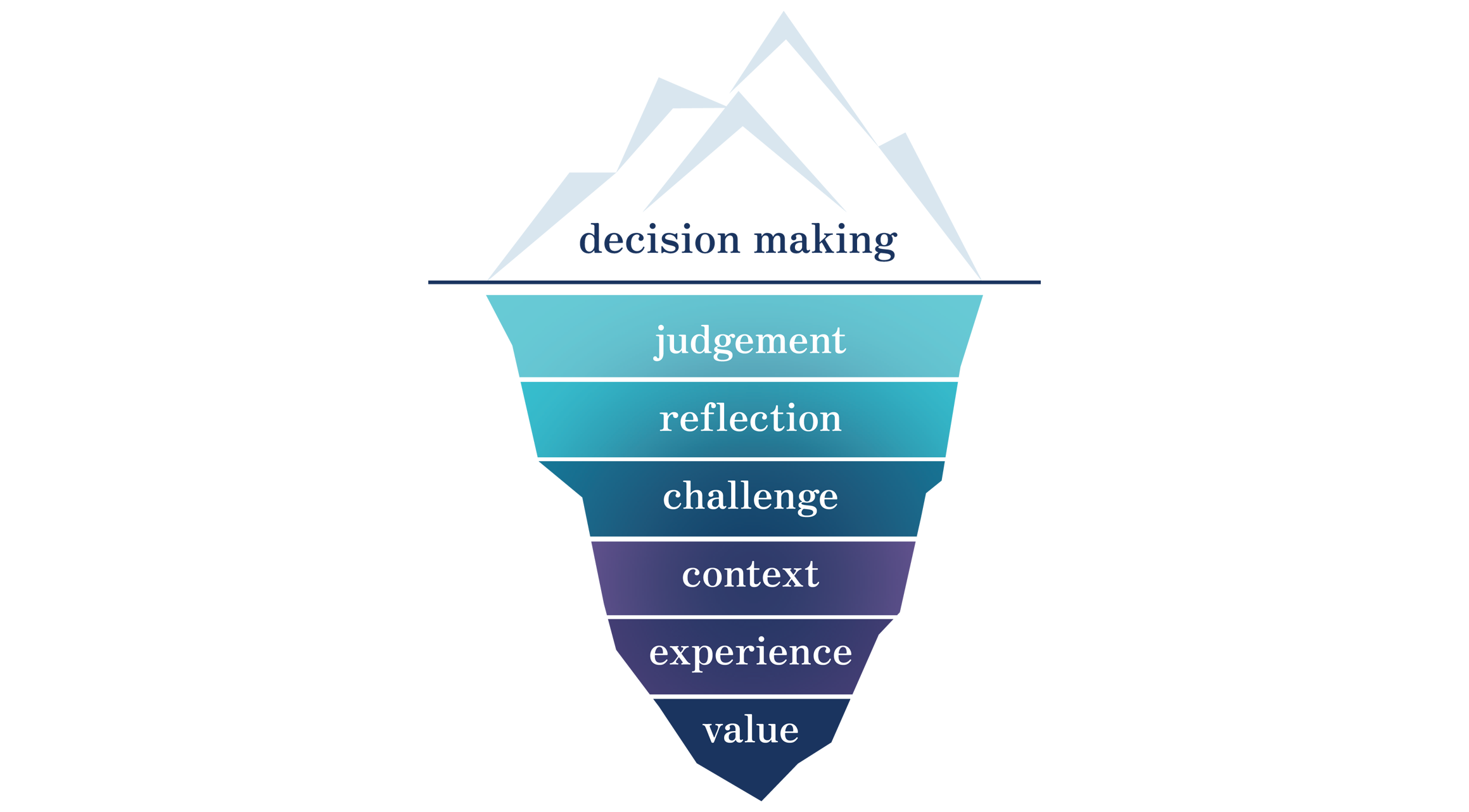
the thinking behind the decision
In our consultancy practice we always encourage leaders to focus on outcomes as they engage in the decision-making process.
Yet outcomes can sometimes disguise what really matters: the quality of thinking behind the decision.
The most significant leadership decisions rarely involve a clear right answer. If they did, they would not require leadership. Instead, they involve balancing competing priorities, navigating uncertainty and thinking through consequences that are not yet fully visible.
This is why leadership is not simply about making decisions. It is about creating the conditions for good decisions to take place.
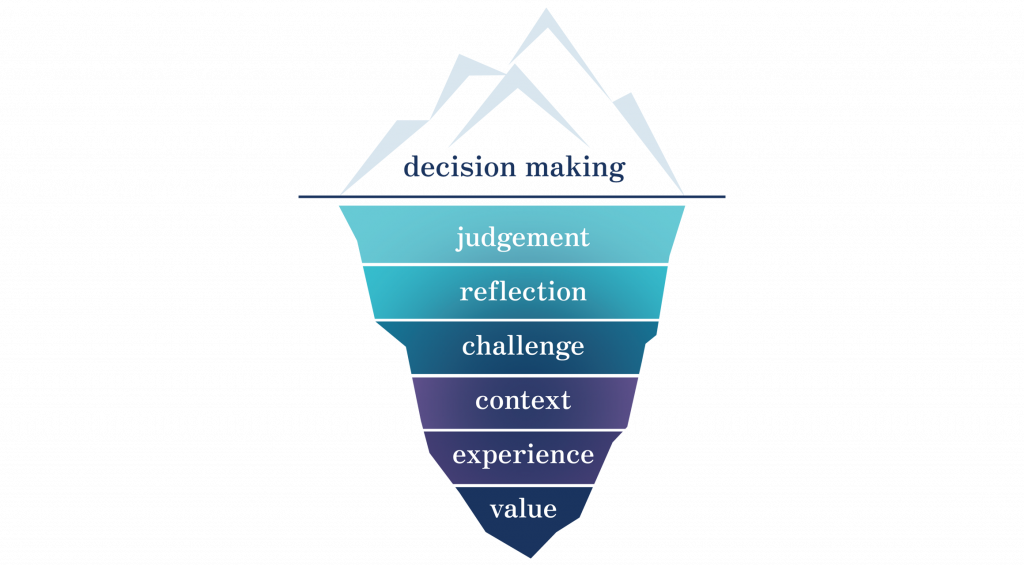
information is not the issue
Leaders today have access to more information, analysis and insight than ever before. Advances in AI are accelerating this trend, making information, analysis and recommendations more accessible at speed. .
AI can help leaders process information faster, explore options more quickly and identify patterns that may otherwise have gone unnoticed. This creates enormous opportunities. However, information alone does not create good decisions.
Most organisations are not short of information. They are not short of reports, dashboards, recommendations or data.
This wealth of information can be hugely distracting and confusing – what we are searching for is focus and clarity.
- What matters most?
- What should we prioritise?
- What are the implications of acting, or not acting?
The challenge facing leaders is no longer simply finding information. It is knowing what to do with it.
In many ways, leadership is less about finding answers and more about applying judgement.
looking beyond the immediate issue
The strongest leaders I work with share a common characteristic.
They look beyond the immediate issue.
They understand that leadership decisions rarely exist in isolation. A decision made in one area of the business often creates consequences elsewhere. What improves efficiency may affect engagement. What delivers short-term results may weaken longer-term capability. What appears to solve one problem can sometimes create another.
As a result, they spend less time searching for certainty and more time exploring implications.
They ask:
- What are we missing?
- What assumptions are we making?
- Who else will be affected?
- What happens next?
These questions do not always make decisions easier. They do, however, improve the quality of thinking behind them.
AI can identify patterns, generate options and accelerate analysis. What it cannot do is fully understand organisational context, competing priorities or the consequences of a decision. These remain leadership responsibilities.
One of the recurring challenges I see in leadership teams is the pressure to move quickly. Faster communication, faster access to information and increasing expectations can create the impression that speed is always the answer.
Yet some of the most costly mistakes organisations make are not caused by a lack of action.
They are caused by insufficient thinking before action.
the value of challenge
Poor decisions are rarely the result of a lack of intelligence or expertise.
More often, they occur when assumptions go unchallenged, alternative perspectives are overlooked or urgency overtakes reflection.
The strongest leadership teams recognise this. They create environments where people can question, challenge and contribute. They are willing to test their own thinking before committing to a course of action.
Importantly, they understand that a healthy challenge is not a sign of misalignment. Often, it is a sign that people care enough to improve the quality of the outcome.
The strongest leadership teams are not necessarily those that agree most often. They are the teams that are willing to challenge each other’s thinking before committing to a decision.
The goal is not agreement. The goal is better thinking.
a final thought
One of the misconceptions about leadership development is that it is primarily about acquiring new knowledge.
In reality, some of the most valuable development comes from improving the way leaders think.
- Through conversation.
- Through challenge.
- Through reflection.
- Through learning from decisions that worked and those that didn’t.
A coaching conversation that encourages a different perspective. A leadership team discussion that surfaces an assumption. A workshop that helps leaders see an issue through a different lens. These moments often have a greater impact than we realise because they improve the quality of thinking behind future decisions.
AI will continue to evolve and become increasingly capable.
Yet the challenge facing leaders will remain remarkably consistent.
How do we make good decisions when certainty is limited and the consequences matter?
Perhaps the real advantage is not access to better information.
Perhaps it is creating the conditions for better thinking.
Because leadership is rarely judged by the quality of the answer in the moment.
It is judged by what happens next.