

Double Helix Thinking: Why Great Coaching Holds the What and the How at the Same Time
In coaching, we spend a lot of time talking about goals, outcomes, and progress. We also spend time on presence, listening, trust, and managing the relationship. Most of us pay attention to both, but often, not at the same time. When we deal with them separately, it is as if what we are working on and how we are working together are different streams.
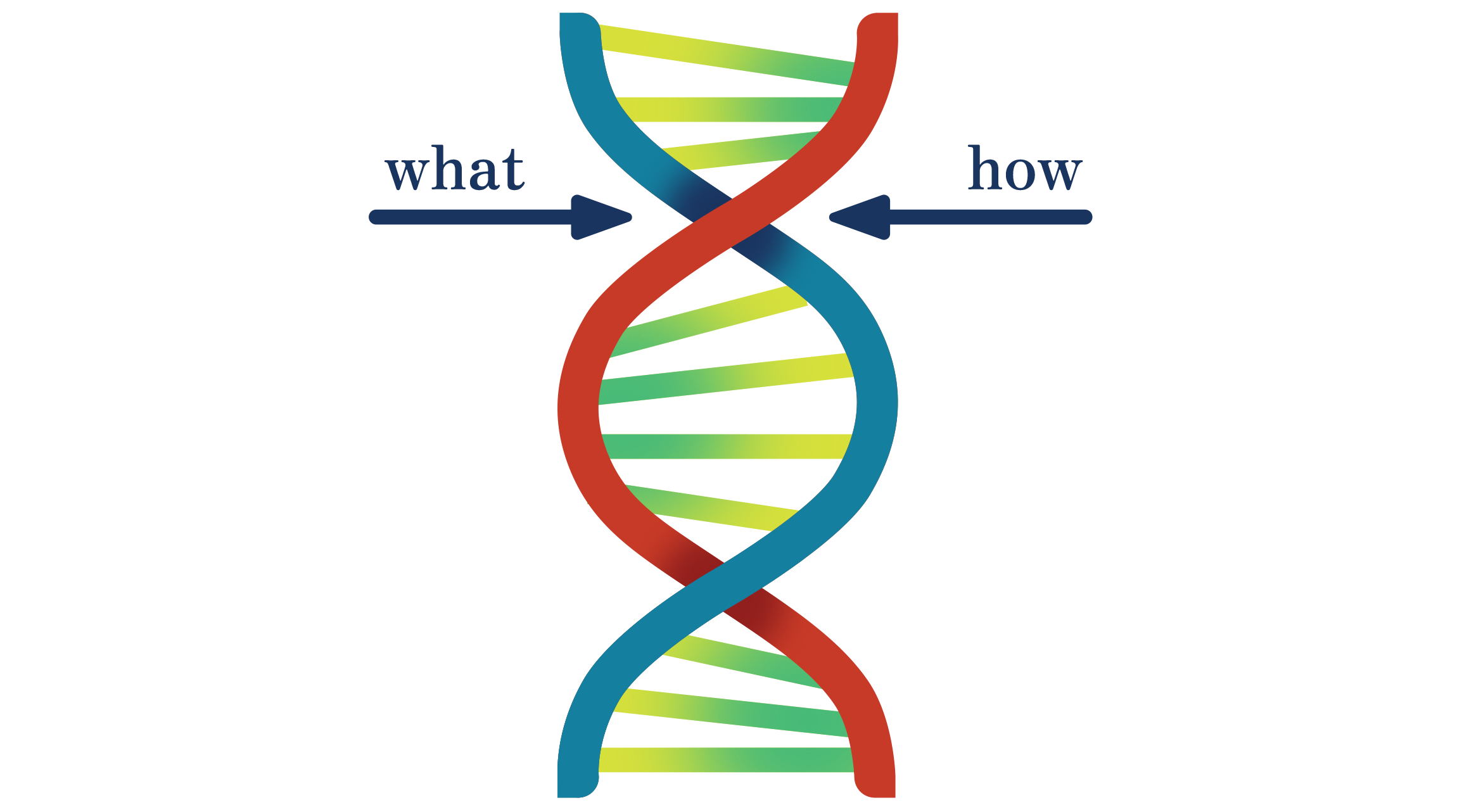
In reality, the most effective coaching happens when these two strands are held concurrently and consistently. Not as alternatives, but as two interconnected strands of the same process. I call this Double Helix Thinking.

Just like the DNA double helix, the what and the how are distinct, but inseparable. When they move together, they create strength, alignment, and momentum. When one is neglected, the whole structure weakens.
the two strands explained
The “What” strand is the visible work:
- Clarifying goals, challenges, and priorities
- Exploring choice and decisions,
- Agreeing actions and accountability
- Evaluating performance, outcomes, and results
This is where coaching often feels productive and tangible. Progress can be tracked and milestones can be measured.
The “How” strand is the relational and process layer:
- Focusing on the quality of attention and presence
- Establishing psychological safety and trust
- Understanding how challenge, support, and power are handled
- Ensuring feedback is given and received
This strand is less visible, but it determines whether the what actually lands.
Double Helix Thinking means never choosing between them. Every conversation, every question, every intervention and indeed, every silence is informed by both.
Why This Matters So Much in Coaching
Coaching is not just a transaction or a series of conversations; it is a relationship that enables change.
If a coach focuses only on the what, sessions can become efficient but shallow. Goals are set, actions agreed, yet something feels brittle. Clients may comply without commitment or make progress that doesn’t stick.
If a coach focuses only on the how, sessions can feel supportive and reflective but drift. Insight replaces action, and conversations circle without traction or forward movement.
The real power of Double Helix Thinking lies in attending to both – concurrently and consistently.
When the coaching is set intentionally within a double helix context, coachees don’t just solve the issue in front of them—they learn a way of thinking and behaving they can reuse long after the coaching ends. They take ownership and develop confidence in their own agency. They develop a set of transferable and adaptive skills that enable sustained growth and development.
What Double Helix Thinking Looks Like in Practice
Double Helix Thinking focuses and amplifies the developmental power of the coaching process. It shows up in small, deliberate choices.
- The coach notices what the client says, and also how they say it – the pace, the certainty or hesitation, and their energy.
- The coach challenges a limiting belief (what), while being attuned to whether the challenge stretches or overwhelms (how).
- The coach focuses accountability for actions (what), while checking whether the agreement feels owned or imposed (how).
The conversation becomes richer because both strands are active at the same time.
Practical Tips for Coaches and Coachees
Coaching is a relationship that is focused through conversations which have a clear purpose – to enable the coachee to understand and make sense of their world and to support them in making effective and sustainable choices that move them towards their clarified goals and aspirations.
Here are a few simple ways to strengthen your own double helix thinking.
Coaches
- Design for both strands
When planning a session, ask yourself two questions:
- What does this coachee need to move forward?
- How do they need me to be with them for that to happen?
Hold both intentions lightly but consciously.
- Name the process, not just the content
If something shifts in the dynamic, say it.
For example: “I notice you paused just now—what’s happening for you?”
This honours the howwithout losing focus on the what.
- Challenge with care, not caution
Avoiding challenge is not kindness.
But challenge without relational awareness erodes trust.
Before pushing, check: Is the relationship strong enough to hold this stretch?
- Contract continuously
Don’t assume alignment just because goals were set at the start.
Regularly revisit both:
- “Is this still the right focus?”
- “Is the way we’re working together still serving you?”
- Model what you want to develop
If you want clients to be reflective, be reflective.
If you want them to sit with uncertainty, don’t rush to rescue.
Your howteaches as much as your questions.
Coachees
- Pay attention to how the coaching feels
Don’t just focus on what you’re talking about.
If something feels off—too fast, too gentle, too focused on action or reflection—name it.
- Use the relationship as data.
How you respond in coaching often mirrors how you respond elsewhere.
We are all creatures of habit so don’t write this off as just art of this conversation – exp[lore whether this is in fact evidence of a habit
Treat these insights as valuable information, not a problem to fix.
- Ask for what you need.
More challenge. More space. More structure. More reflection.
Coaching works best when the how is co-created.
- Notice what you’re learning about yourself
This is not just about what you’re achieving.
Sustainable change comes from patterns understood, not just goals met.
A Final Thought
Double Helix Thinking reminds us that coaching is not about choosing between results and relationship. It is about recognising that results emerge through relationship.
When the what and the how are consistently held together, coaching conversations become more powerful, insights become more real and progress feels both effective and human.
And that is where real, sustainable change happens.